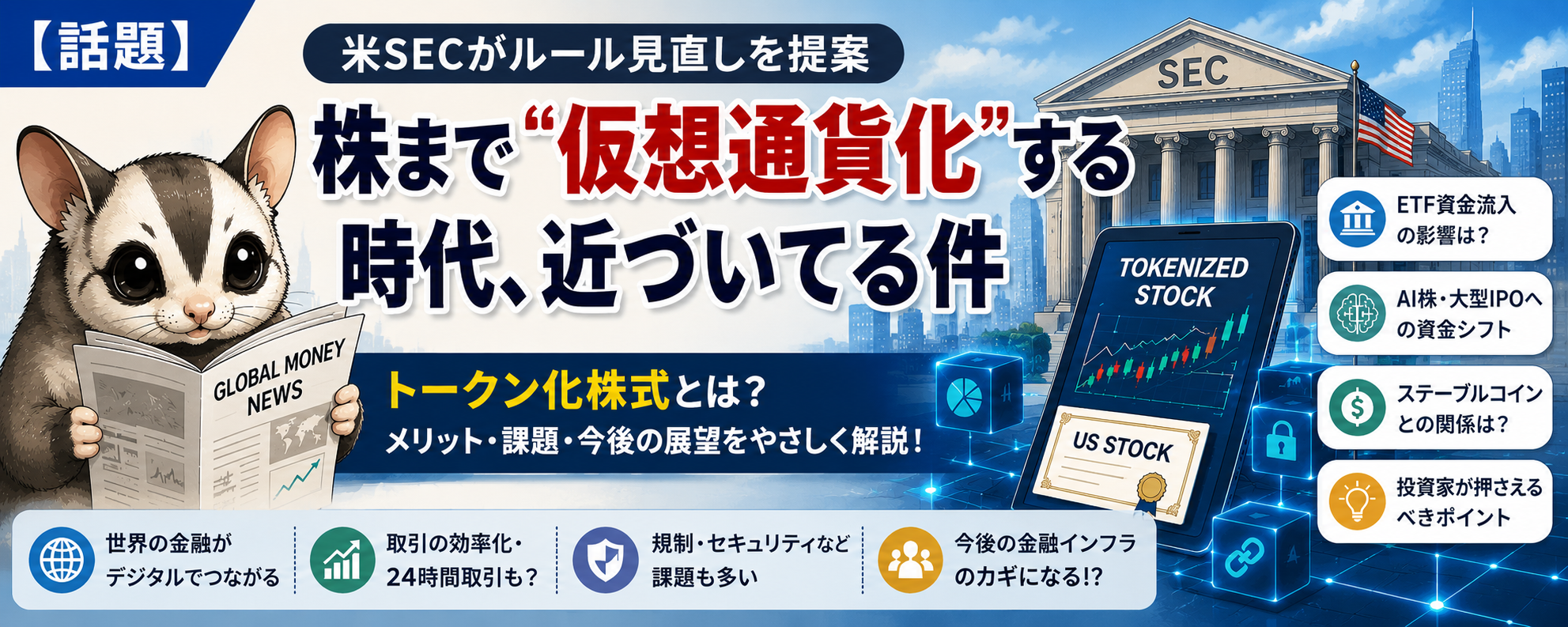
Tokenized stocks, also called tokenized equities, are becoming more visible in global financial news. The phrase usually refers to traditional securities or stock-linked products represented as tokens on a blockchain.
For years, crypto news focused mainly on Bitcoin, Ethereum and price movement. Now the discussion is expanding to stocks, bonds, funds, real estate, stablecoins and the infrastructure behind financial markets.
What are tokenized stocks?
Tokenized stocks are blockchain-based tokens that represent stocks or stock-linked rights. But the details matter. A token may be backed by real shares, or it may simply track the price of a stock through a contract-like structure.
That means a tokenized stock is not automatically the same as owning an ordinary share in a brokerage account. Voting rights, dividends, custody and legal claims depend on how the product is built.
What is happening now?
In the United States, regulators, exchanges and financial institutions are discussing how blockchain technology should connect with traditional securities markets. Reports have described SEC-related rule discussions that could make tokenized stock trading easier under certain conditions.
This is not simply a story about a new crypto coin. It is a story about financial infrastructure: how existing stocks and securities may eventually connect with blockchain-based trading, settlement and custody systems.
Why are tokenized stocks important?
- More transparent records: ownership and transfers may be easier to verify on-chain.
- Faster settlement: post-trade processes could become more efficient.
- Longer trading hours: some designs may allow trading outside traditional market hours.
- Fractional access: high-value assets may be split into smaller units.
- Global access: cross-border holding and transfer may become easier.
However, none of this means that every stock will soon trade freely on-chain 24 hours a day. Identity checks, investor protection, liquidity, market surveillance, tax rules and cybersecurity all remain major issues.
Key risks beginners should understand
1. Do holders receive real shareholder rights?
A token may not include voting rights, dividends or direct ownership of the company. Always check who holds the real shares, whether the issuer recognizes the product and what rights token holders actually receive.
2. Is the venue regulated?
A token traded on a regulated securities exchange is different from a token traded on a lightly regulated crypto platform. The level of investor protection can vary widely.
3. Can the token price diverge from the real stock price?
If liquidity is thin or markets are fragmented, the token price may differ from the underlying stock price. This can make buying or selling more difficult than expected.
4. How are custody and security handled?
Blockchain does not automatically remove operational risk. Private keys, exchanges, smart contracts and recovery procedures all matter.
Yasa Money summary
The key lesson is simple: crypto news is no longer only about Bitcoin going up or down. Tokenized stocks show that blockchain technology is moving closer to mainstream finance.
When reading crypto news, watch where capital is moving, how regulation is changing, how market infrastructure is evolving and whether crypto is becoming more connected to traditional finance.
FAQ
Are tokenized stocks cryptocurrencies?
They are not the same as Bitcoin. They are usually digital representations of traditional financial assets or stock-linked products.
Can tokenized stocks trade 24/7?
Some designs may allow longer trading hours, but this depends on the platform, regulation, liquidity and settlement system.
What should investors check first?
Check backing, shareholder rights, custody, regulation, issuer consent, liquidity and platform risk.
This article is for information and education only. It does not recommend buying or selling any crypto asset, stock or financial product.